CÁDIZ
WHERE THE HORIZON OPENSA AND THE DIVINE SPEAK
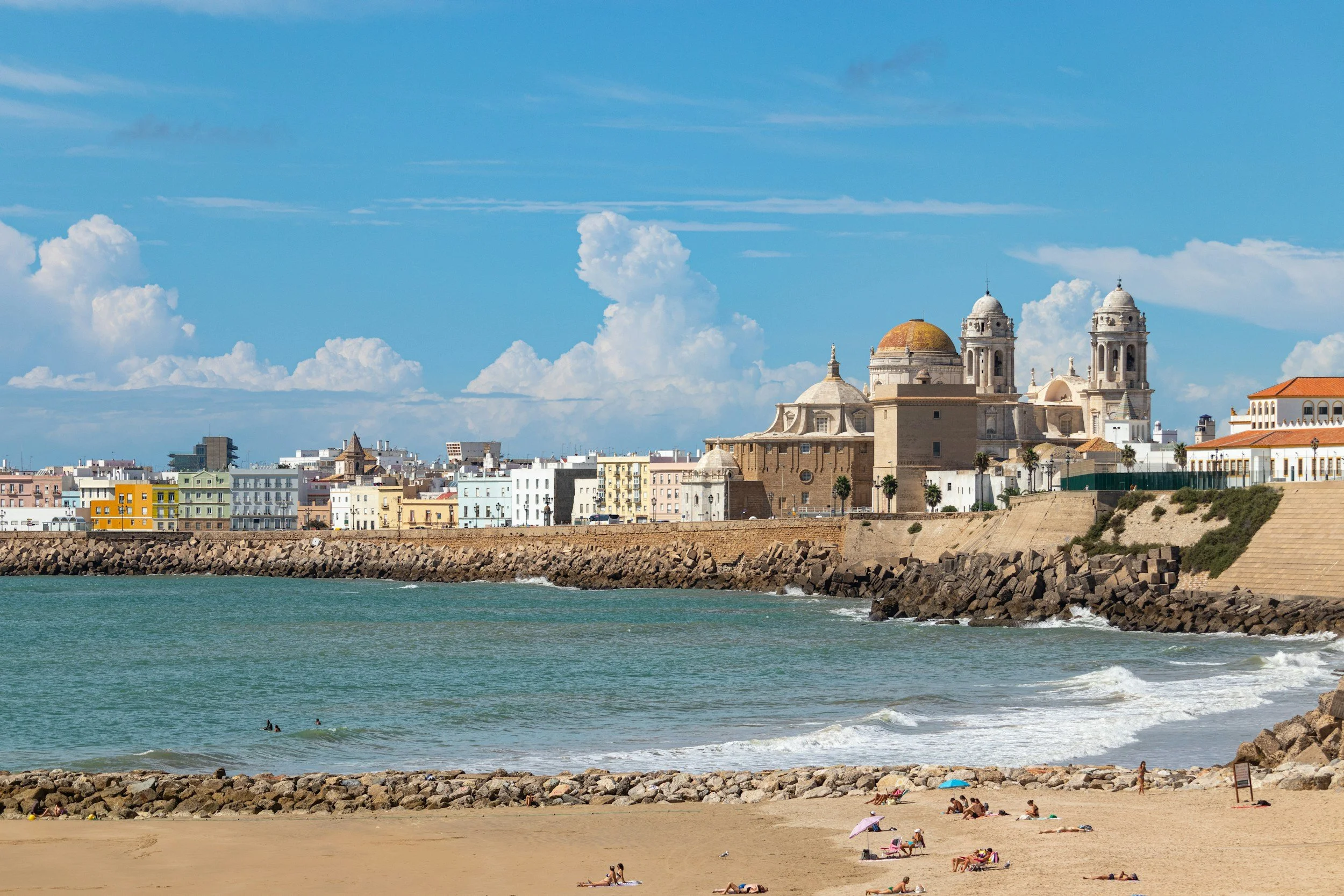
Cádiz is not merely a city; it is an ancient threshold where continents, oceans, and epochs converge. Founded by the Phoenicians more than three millennia ago, it is one of Europe’s oldest cities, yet it carries its age with an effortless luminosity. Here, the past does not sleep. It rises with the tide, hides in the cracks of salt-worn stone, and vibrates in the light that has inspired sailors, philosophers, poets, and mystics for centuries.
Through the centuries, Cádiz became a sacred prize for empires. Romans expanded it, Muslims enriched it, Catholics reshaped it, and even Napoleon’s forces tried to seize it. Yet Cádiz remained unbroken, like a seashell shaped by millennia of tides, holding within it the whisper of something ancient, luminous, and eternal.
Its very location is a mystery of destiny rather than chance. Resting at the meeting point of the Atlantic Ocean and the Mediterranean Sea, Cádiz stands beside the Pillars of Hercules, the legendary boundary of the known world. Ancient sailors prayed here, philosophers contemplated the infinite, and mystics felt the thin veil between this world and another.
During the Spanish voyages to the Americas, this threshold between seas became one of the most vital portals between Europe and the New World, a crossroads not only of commerce, but of consciousness itself.
In 1812, Cádiz again became a birthplace of transformation when the first Spanish Constitution was proclaimed within the Oratorio de San Felipe Neri, proof that even ancient entities can become vessels for new light.
The Light of Cádiz, A Philosophical Character of Its Own
To understand Cádiz, one must begin with its light. The city is surrounded almost entirely by water, and the Atlantic reflects the sun in a way that seems less physical than metaphysical. Philosophers have long described Cádiz’s light as a symbol of clarity, revelation, and the permeability between worlds. It is the kind of brightness that dissolves boundaries, reminding the visitor that perception is always a dance between what is seen and what is understood.
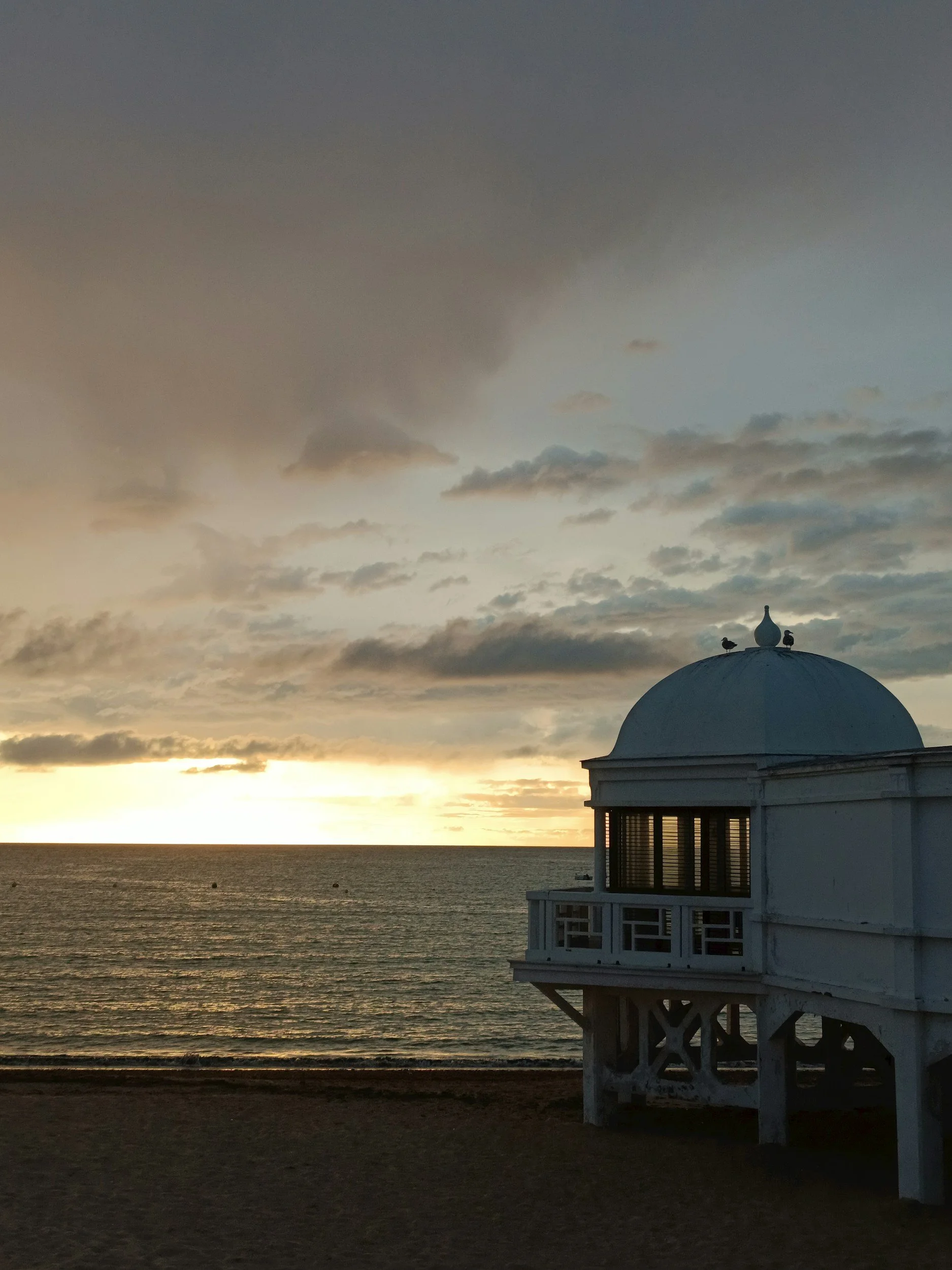
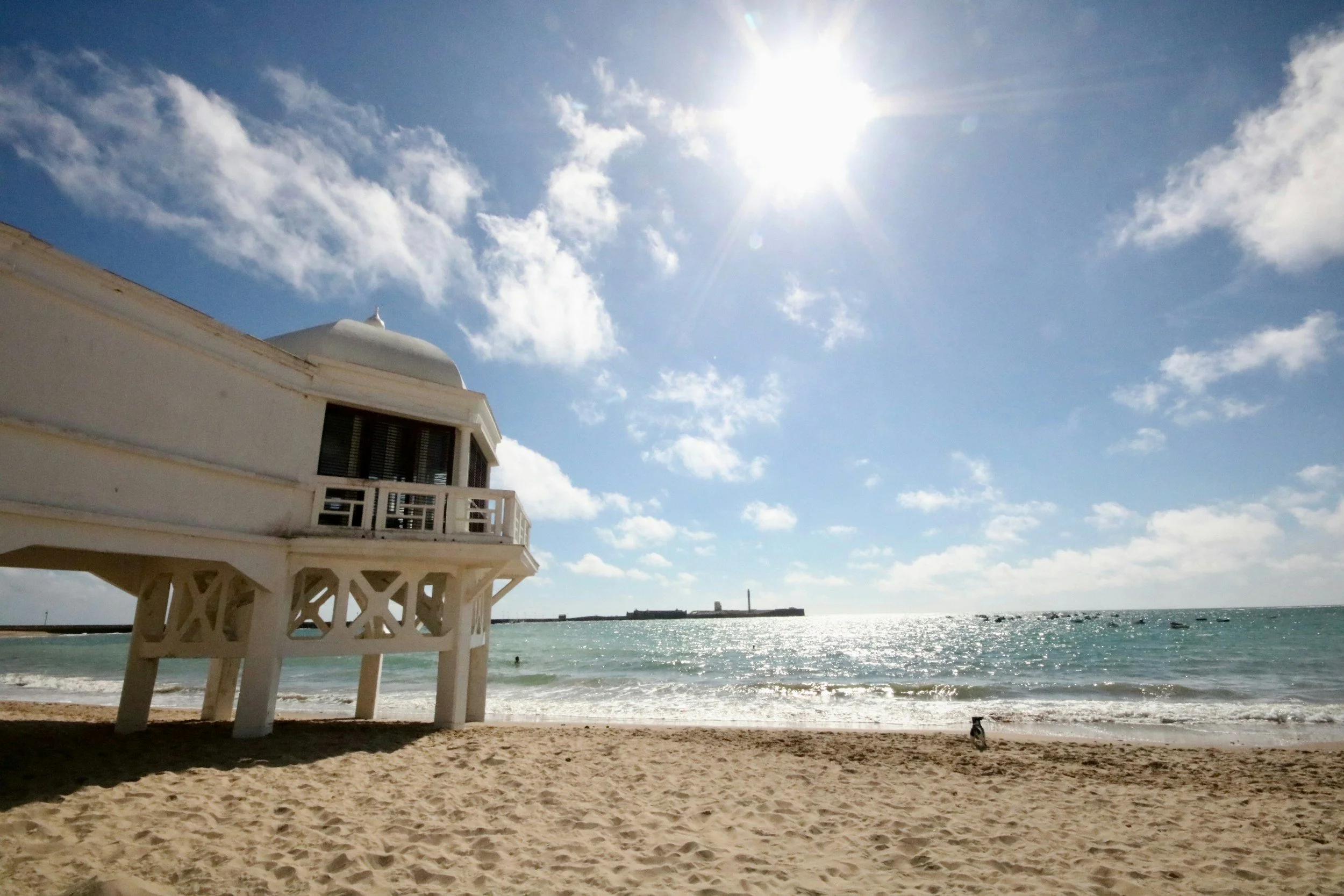
Standing along La Caleta beach, where ancient ships once anchored and where the city opens itself to the sunset, you feel the same quiet, expansive presence that the Phoenicians must have felt, an awareness that the divine is not a distant force but one that arrives gently on the horizon.
La Caleta, The Gate of Origins and the Whisper of Eternity
La Caleta is the most intimate of Cádiz’s sanctuaries. Nestled between two fortresses, San Sebastián and Santa Catalina, this small cove once welcomed Phoenician traders and later became a place where locals watched the world come and go.
Today, at dusk, the sea becomes a living mirror of the sky. Time stretches. People gather not only to swim or stroll but to witness a daily ceremony where the sun meets the ocean in perfect equilibrium. Many speak of a sensation of communion here: a feeling that the boundary between the human and the divine becomes thin enough to touch.
The Puerta de Tierra, A Bridge Between the Mortal and the Eternal
The Puerta de Tierra is more than a monumental entrance; it is a symbolic boundary between the timeless old Cádiz, the island, and the modern city that grew around it. Passing through it resembles stepping from one era into another.
This gateway reflects a philosophical truth Cádiz has embodied for centuries: to move forward, one must pass through memory. The stones themselves have seen invasions, revolutions, celebrations, and rebirths. They hold the echo of every transition, every transformation, reminding us that change is sacred when rooted in identity.
Torre Tavira, The Watchtower of Understanding
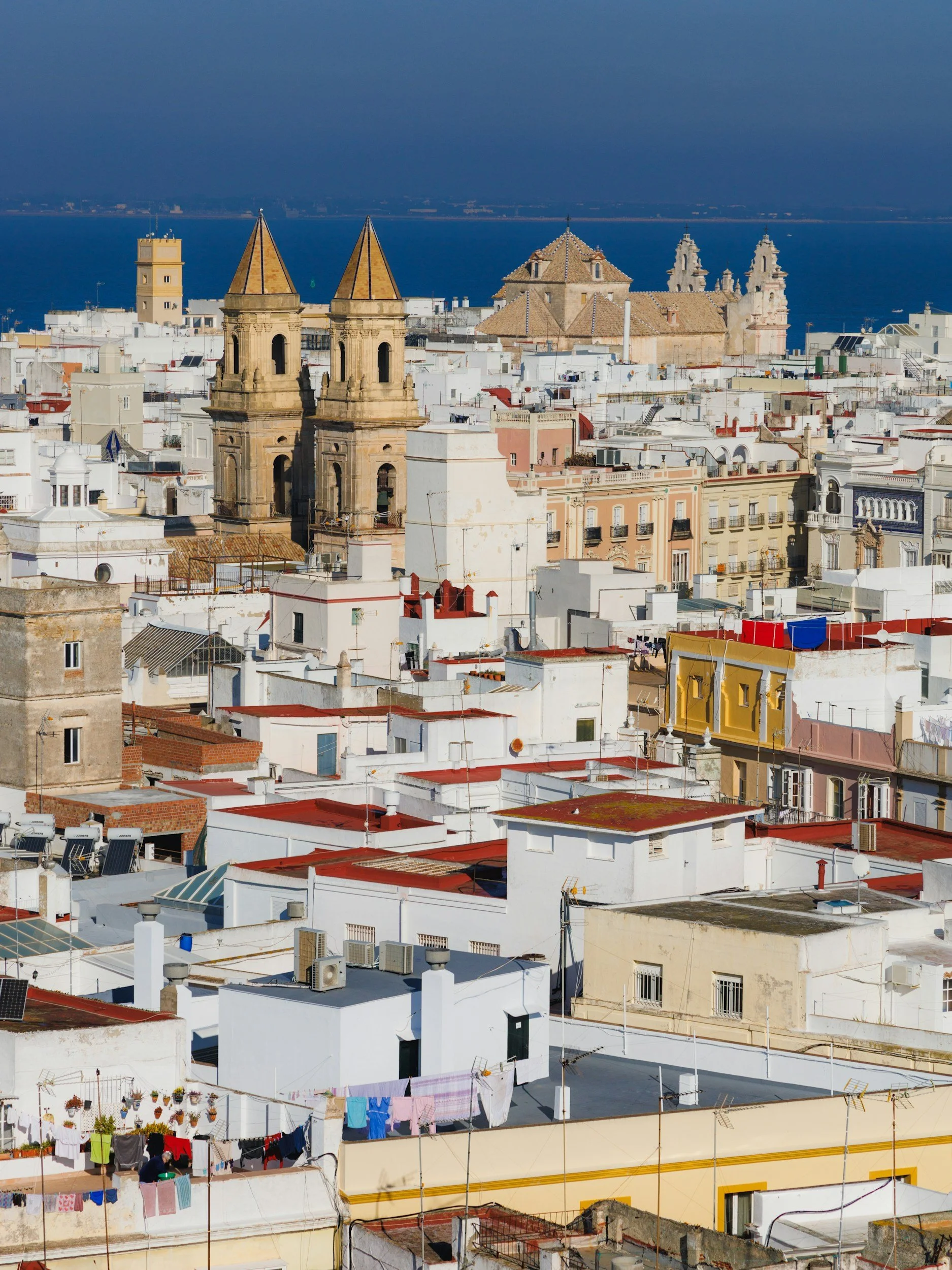
High above the old city rises Torre Tavira, a watchtower built not only for observation but for contemplation. Its camera obscura, a device that projects the outside world into darkness, becomes a metaphor for introspection: Cádiz invites you to contemplate the world by first stepping into shadow.
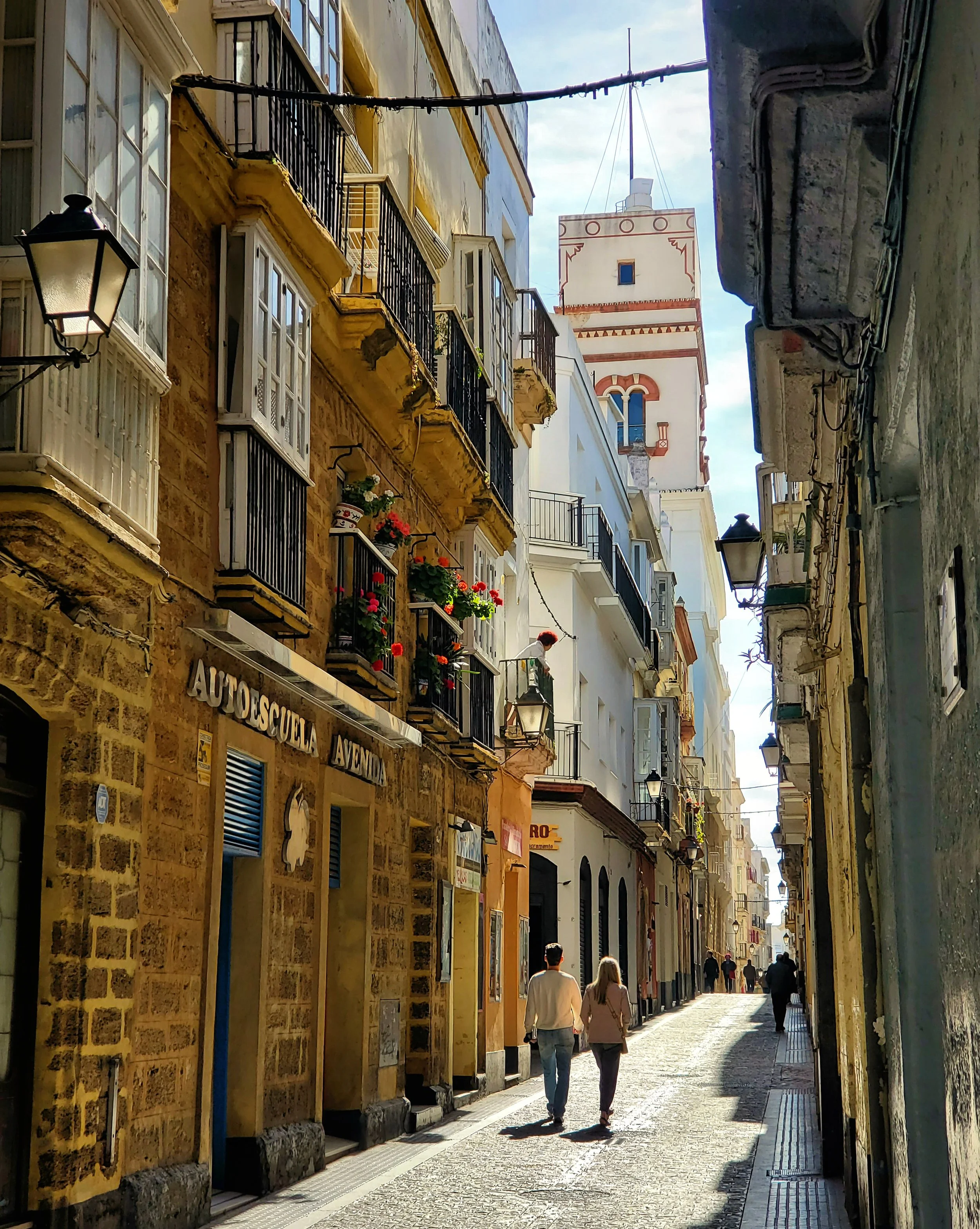
From the terrace, the panorama is philosophical in its geometry: narrow streets winding like questions; plazas that open like revelations; the ocean encircling everything as if guarding the truth that all journeys, physical or spiritual, ultimately return to the sea.
The Teatro Romano, Echoes of Human Thought and Divine Drama
Hidden beneath the modern city lies one of Spain’s oldest Roman theaters. Emerging from centuries of silence, it now embodies the connection between human storytelling and divine symbolism. Here, tragedy and comedy once unfolded under the sky, reminding everyone that philosophy began not only in books but in collective reflection, people gathering to understand themselves through performance.
The theater still carries an aura of presence, as though the voices of the past are waiting for the next listener to arrive.
The Cathedral of Cádiz, A Dome of Sunlight and Song
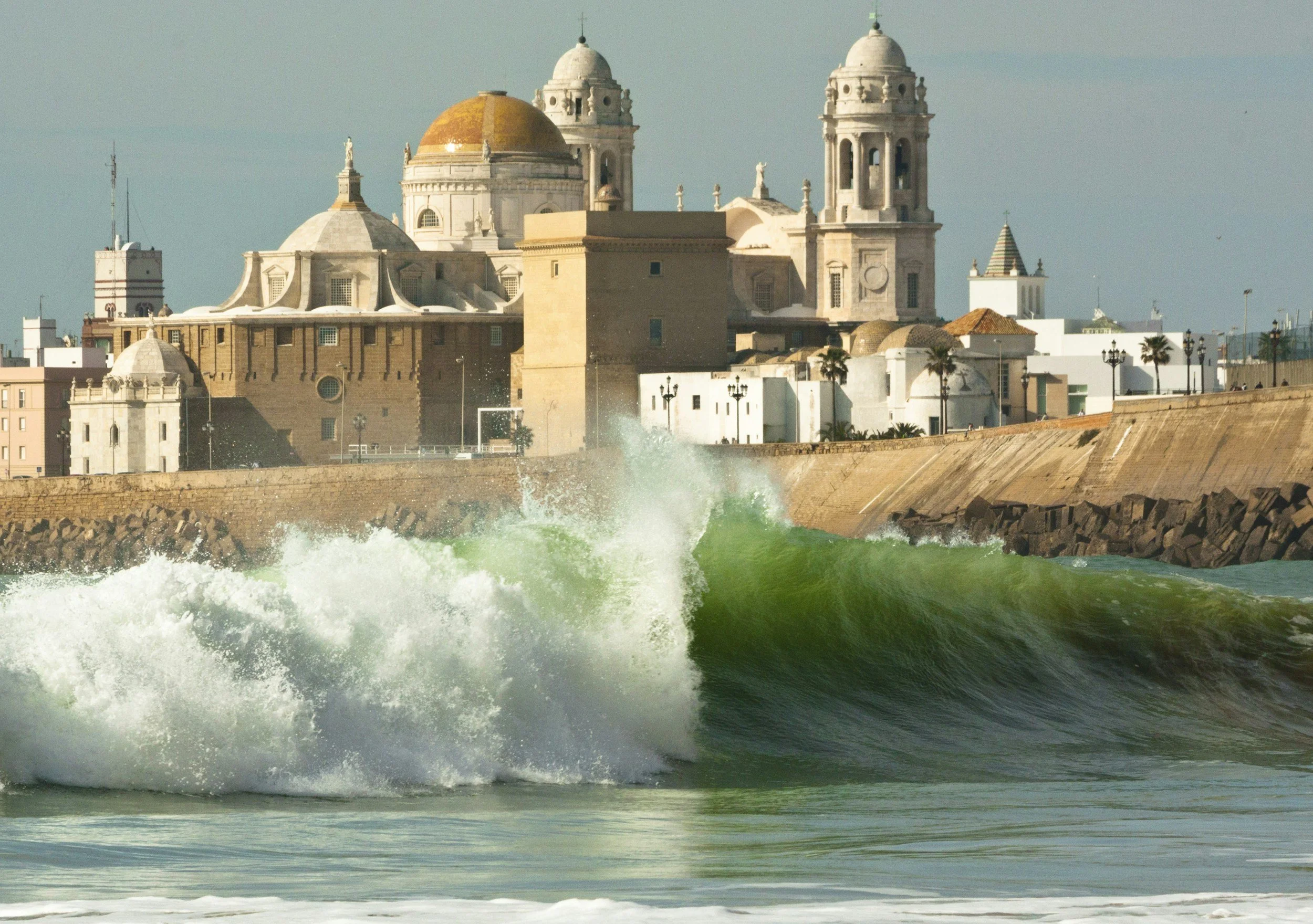
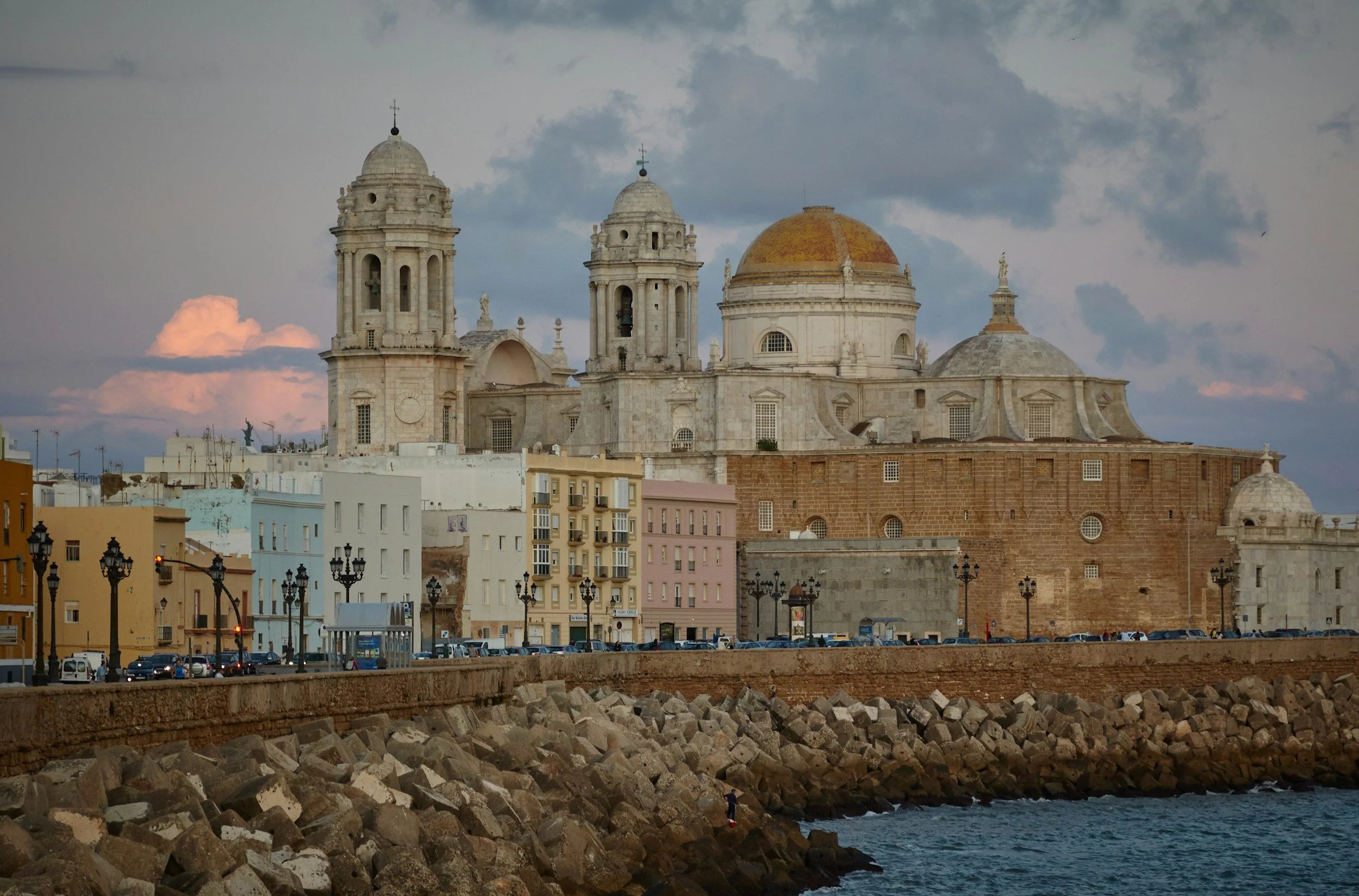
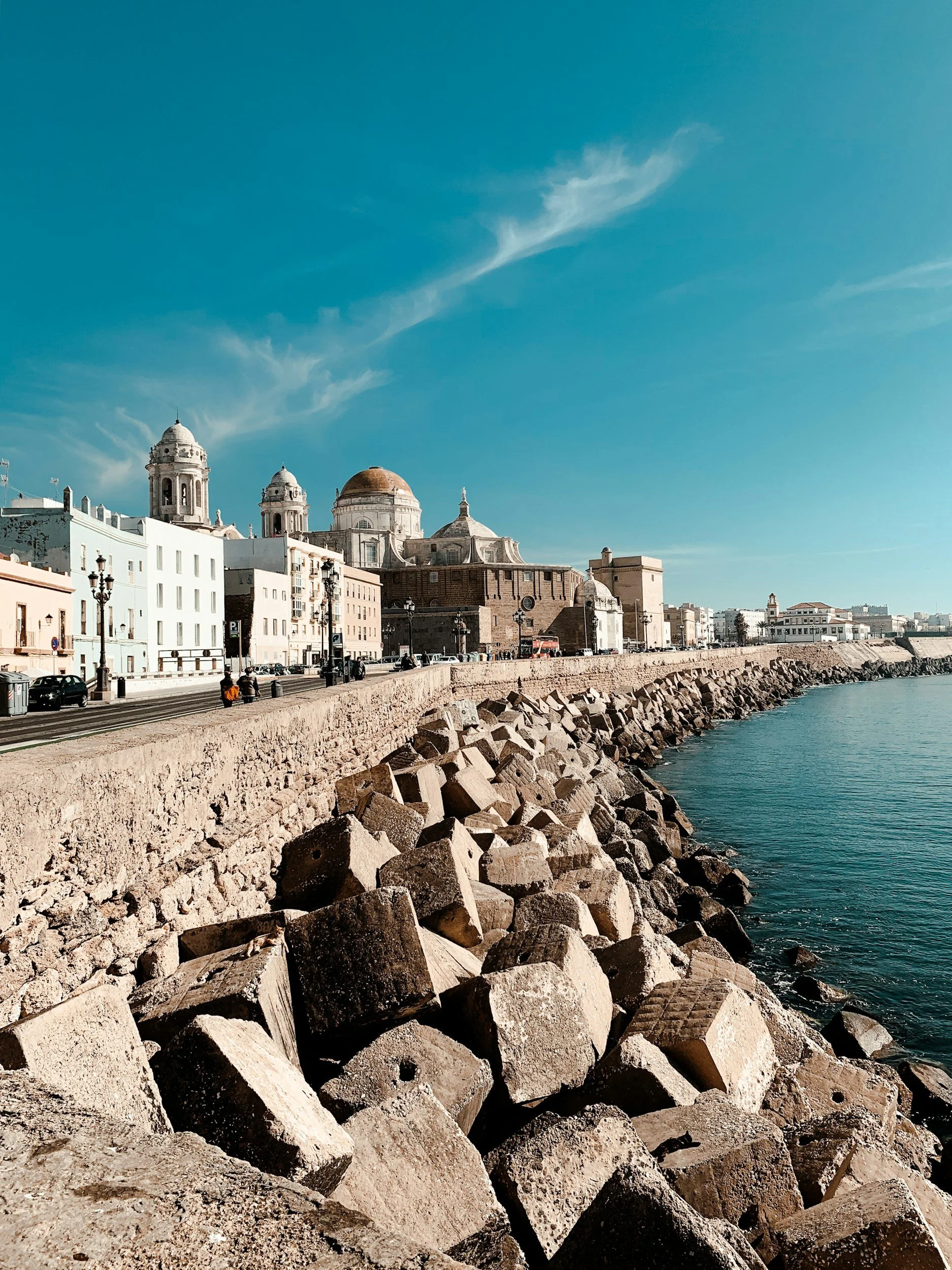
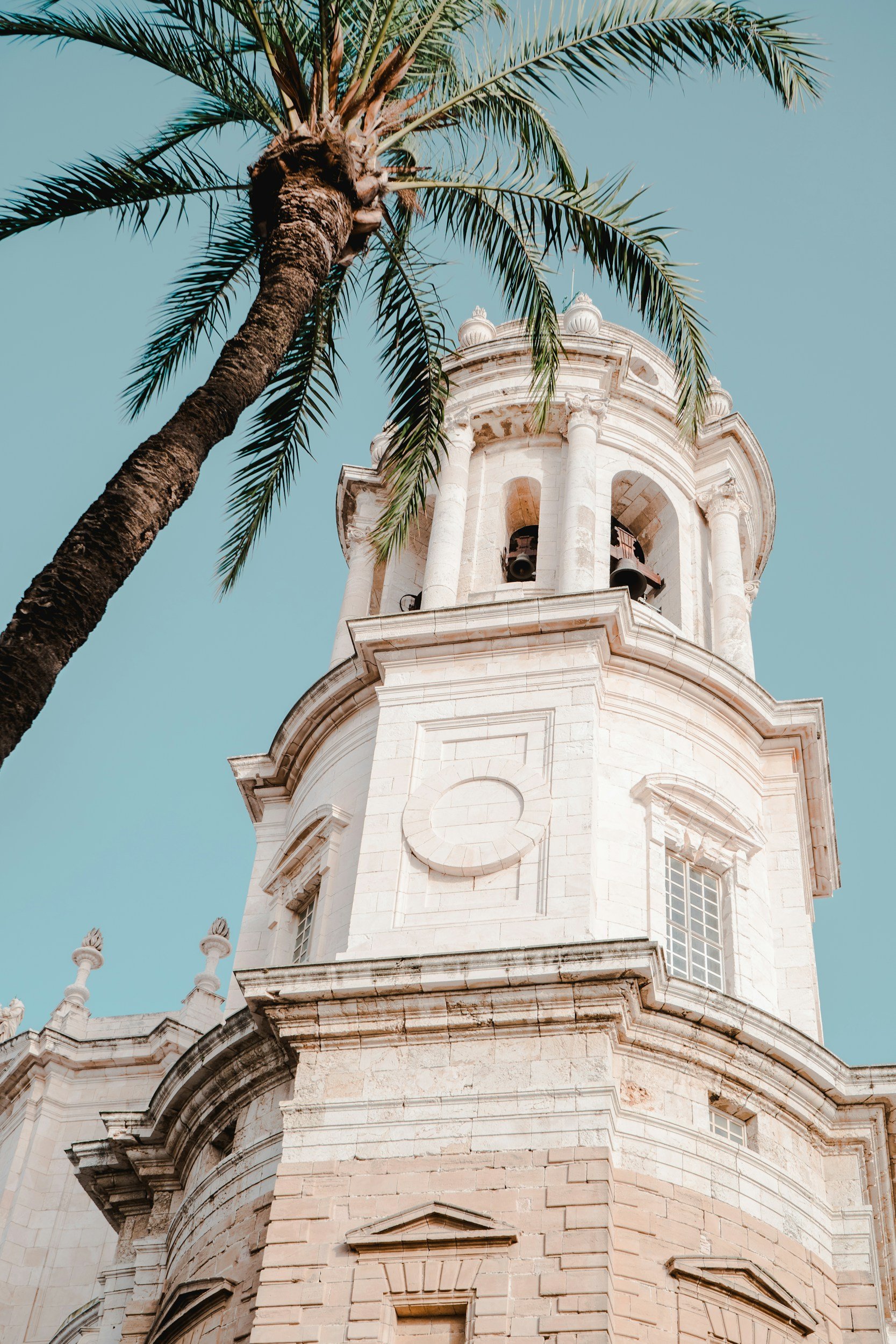
Few places capture the dual nature of Cádiz, the earthly and the celestial, as gracefully as its cathedral. Its golden dome glows under the sun, a beacon for sailors and dreamers. Inside, light filters through in soft, contemplative waves that seem to slow down time.
The crypt, with its perfect acoustics, has become a place where sound transcends physical form. When a single note is sung, it reverberates like a pulse from another world. The cathedral becomes a living dialogue between body and spirit.
The Alameda Apodaca, Where Nature Becomes Philosophy
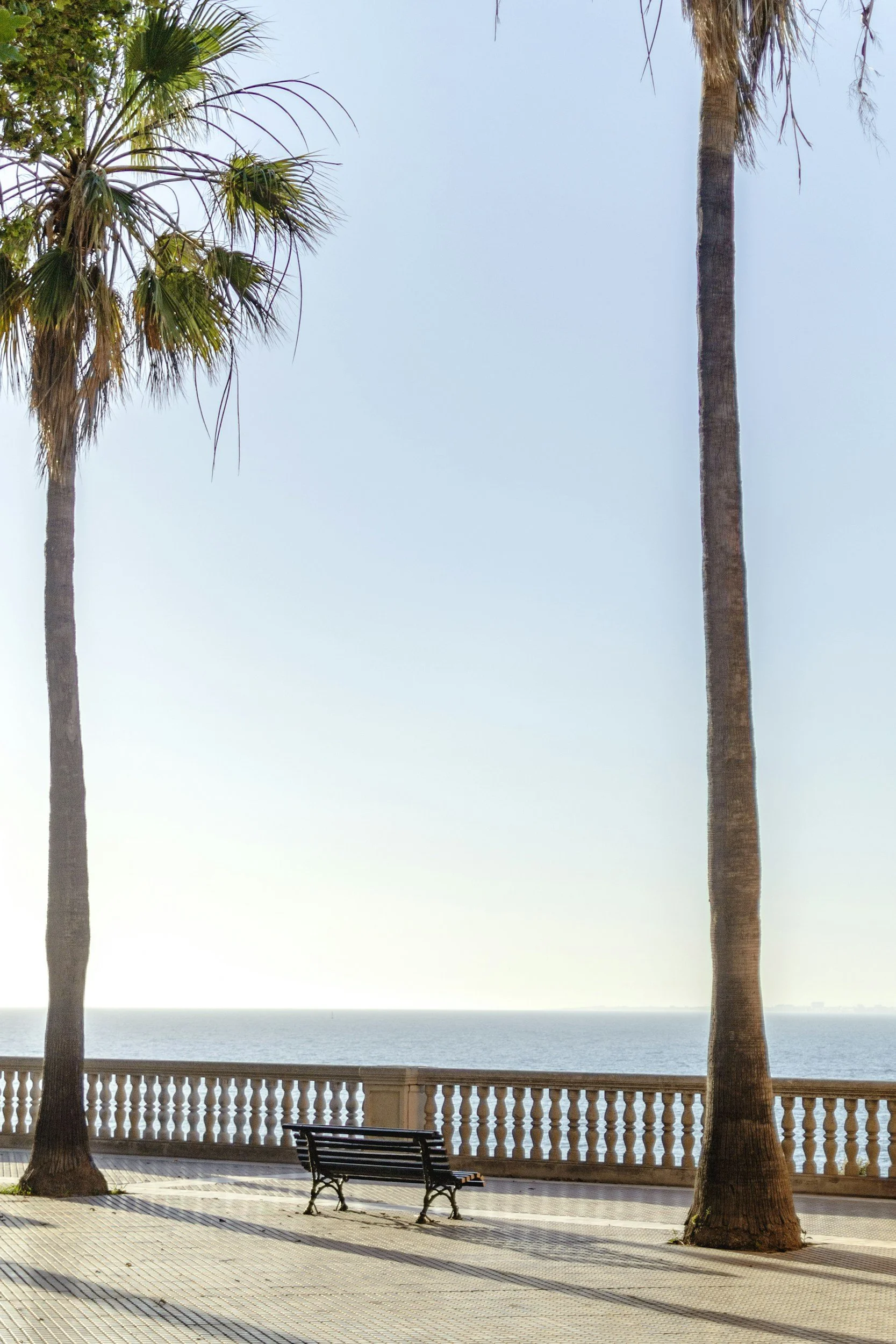
This balconied garden overlooking the sea is where Cádiz feels most like a meditation. Twisted ficus trees form natural corridors, their roots sculpted by centuries of wind. The ocean whispers through the leaves, reminding visitors that nature is the first philosopher and the oldest teacher.
In the Alameda, every bench becomes a place for reflection, every stone a reminder of the city’s relationship with time, cyclical, fluid, never-ending.
A City of Thresholds, Light, and Living Memory
Cádiz is a city that does not try to be divine. It simply is, because it has always existed at the edge of the known world, where humans looked out to the vastness of the ocean and asked: Where do we come from?, Where are we going?, And what lies beyond the horizon?
Here, the present and the past coexist effortlessly. Here, philosophy is not confined to books. It is lived in the tide, the wind, the stone, and the sun. Cádiz reminds us that the divine is not distant. It arrives each day with the light, settles in the seabreeze, and lives quietly within the human heart that dares to listen.
CAPACITY: 14 people - 7 Rooms - 6 Bathrooms
Casa Palacio Las Marías is a unique exclusive retreat and workshop venue in Cadiz City, one of the oldest cities in western Europe. This is an old city villa that has been rehabilitated and designed with the intention of creating a universe of calm, stillness and selected frequencies in the middle of the amazing history and culture of Cadiz.
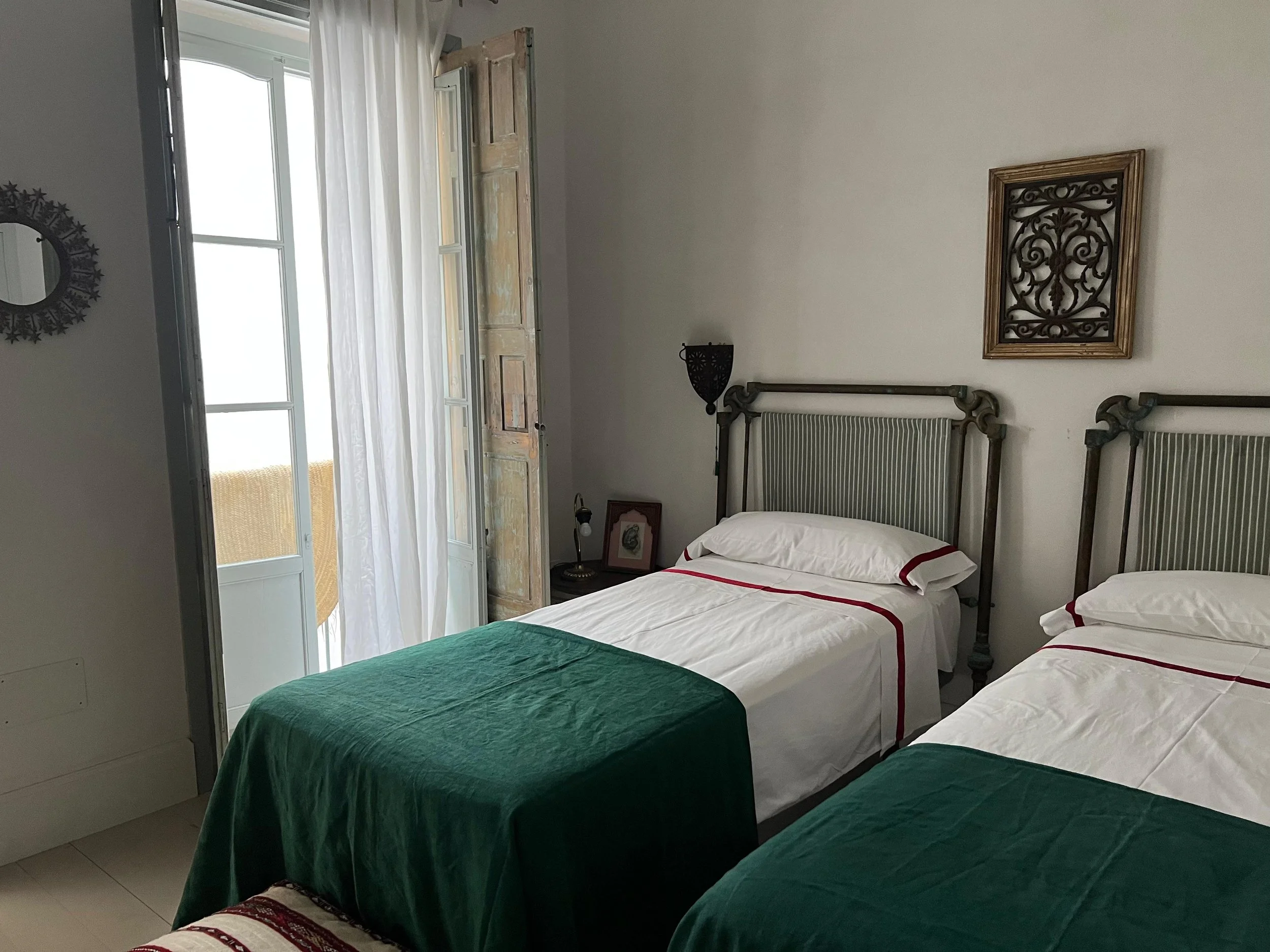
The heavenly main door made of Caribbean mahogany is the first sign that you are about to enter a unique space built on the intention of human wellness and transformation based on peace and rest. There are 6 suites with 7 rooms and 6 bathrooms with a capacity of up to 14 people. Each suite has individual energy with its own name and design.