JEREZ DE LA FRONTERA
A PLACE WHERE EARTH REMEMBERS, AND THE DIVINE STILL BREATHES
Jerez de la Frontera rises from the Andalusian soil like a memory awakened by light, a city where the past has never died but continues to walk beside the present, folded gently into its stones, courtyards, vineyards, and ancient breath. For over five thousand years, these lands have been shaped by Tartessians, Neolithic settlers, Romans, Arabs, and Christians, each leaving behind traces of their essence, threads of knowledge, ritual, and beauty woven into the city’s timeless soul.
Here, the divine does not wait behind walls; it glides along sun-warmed cobblestones, hums in the echo of hooves at dawn, and lingers in the perfume of must and orange blossom. Jerez is a place where humanity has long practiced the sacred art of listening.
The Church Bells: The Breath of Awakening
At dawn and dusk, the bells of Jerez unfurl their ancient chant across the rooftops, waves of molten bronze resonating over a city that has listened to them for centuries. Their sound is more than vibration: it is cleansing, awakening, a call into presence. Each toll cuts through the veils of thought and settles into the heart as a reminder that the sacred is always near.
For nearly eight centuries, since the Christian reconquest in the 1200s, these bells have carried their ancient chant across the city, calling countless souls, farmers, travelers, pilgrims, and dreamers, to moments of presence and inner stillness.
The Fields as the First Cathedral
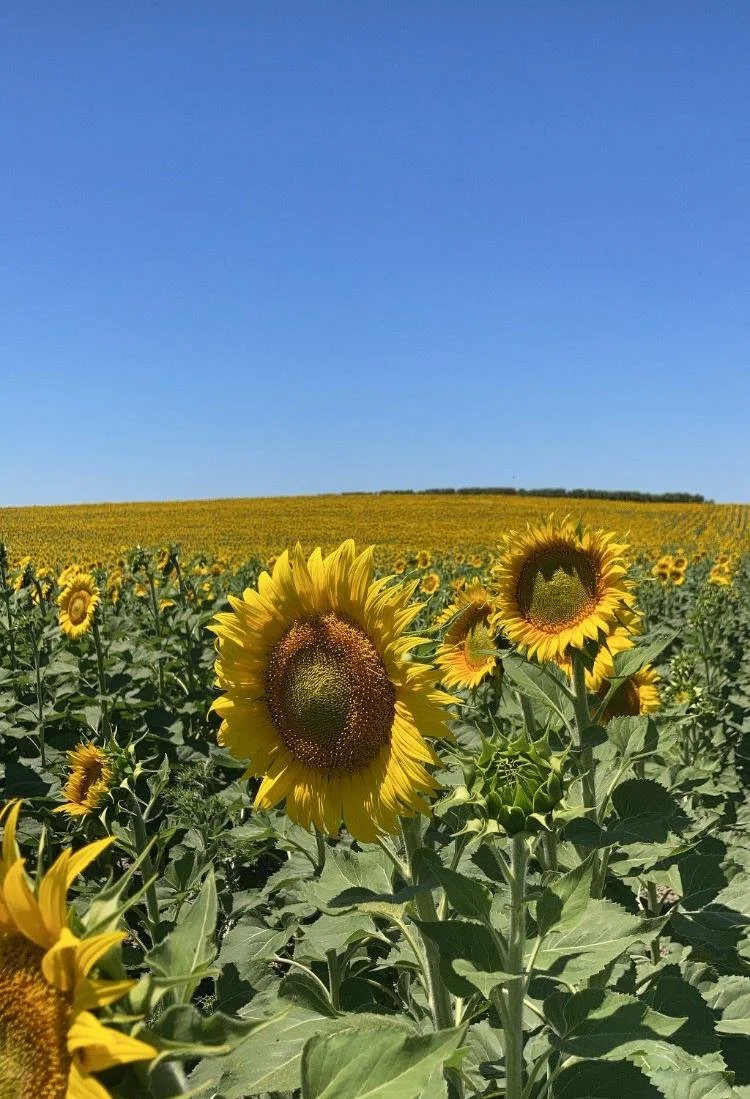
Long before the first church crowned the skyline, the land itself served as sanctuary. La Campiña de Jerez, with its rolling wheat fields and radiant horizons, taught the earliest inhabitants the eternal cycles of life, death, and rebirth. Vines, cultivated here since Roman times, spread like emerald constellations, binding humanity to the soil through the sacred ritual of harvest.
Here, the divine was not distant; it pulsed in the swelling grape, in the shifting seasons, and in the quiet alchemy of nature.
Wine: Human Energy Meets the Eternal
Sherry: Time, Patience & Living Philosophy
Jerez stands at one point of the legendary Sherry Triangle, guardian of the world-famous D.O. Jerez–Xérès–Sherry. For centuries, this wine has been both sustenance and sacred offering, a pillar of the local economy, and a defining element of its cultural identity. The bodegas, vast and cathedral-like, hold barrels resting like meditating monks, each containing decades of whispered history. The mystical velo de flor, a living veil that transforms the wine, has long been revered as a symbol of patience and trust in the unseen.
Sherry is not merely tasted; it is understood. Fino teaches clarity, Amontillado reveals the beauty of transition, and Oloroso embodies depth and memory. Each sip carries the wisdom of centuries of hands, harvests, prayers, and winds that have shaped this land. In the hushed stillness of the bodegas, one ancient truth endures: nothing created in haste endures.
Bodegas of Jerez
Vaulted like basilicas and scented with time, the bodegas are sanctuaries where wine matures into wisdom. Sherry is more than a drink, it is a distilled philosophy of patience, transformation, and the quiet miracle that unfolds when nature and craft surrender their will to time.
Flamenco: The Sacred Fire of Jerez
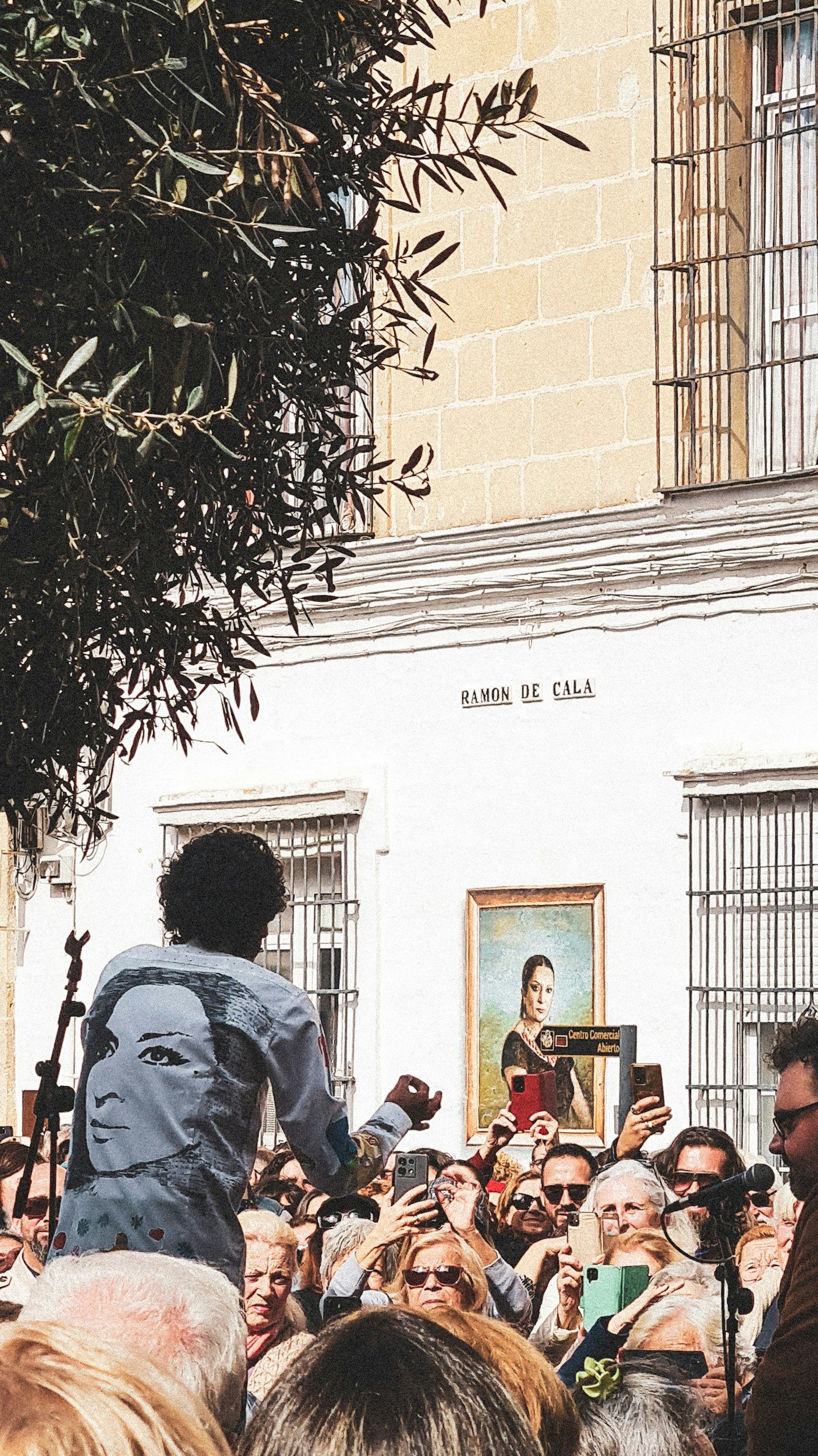
Born from the fusion of ancient cultures; Arab, Roma, Jewish, African, and Andalusian traditions, flamenco in Jerez is not performance; it is ancestry in motion, it’s the soul transformed into words and rhythm.. This city gave birth to legends like Lola Flores and José Mercé, voices forged in fire, grief, joy, and transcendence. In the barrios of Santiago and San Miguel, a quejío (mourning) can tear open the air like a flame lifting toward the divine. In the peñas, the cantaores do not sing to be admired, they sing to open portals.
Feria de Jerez
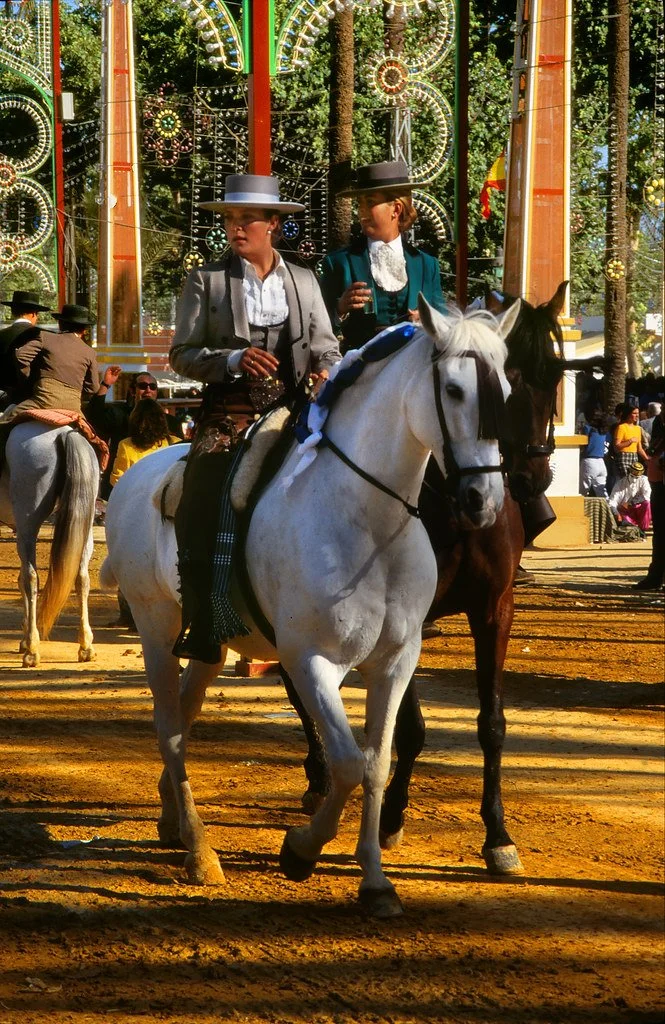
During the Feria de Abril, the city becomes a living altar: the beauty of women dressed in flamenco dresses bloom like moving flowers, elegant horses dance beneath lantern-lit skies, and glasses of sherry rise in celebration of life’s fervor.
The Feria de Jerez, the radiant Feria del Caballo, carries within it the spirit of centuries. Its origins lie in the medieval gatherings of the 13th to 15th centuries, when farmers, breeders, and traders from across Andalucía converged each spring upon these lands. They came not only to buy and sell, but to honor the noble horses that had long defined the soul of Jerez.
What began as a practical meeting beneath the returning light of spring gradually transformed into something far more enchanted: a festival where the heartbeat of the horse, the renewal of the season, and the identity of a people wove themselves into a single living tapestry. Flamenco rose at its center; raw, ancestral, and luminous, its cry shaping the feria’s emotional pulse. And alongside it, Sevillanas unfolded like a joyful ritual, danced in pairs beneath the bright Andalusian sky, each turn and gesture echoing the rhythm of spring and the timeless elegance of tradition.
By the 19th century, this once-humble fair had blossomed into the Feria we know today, vibrant with flamenco’s fire, the swirling grace of Sevillanas, shimmering carriages, lantern-lit casetas, and the freshness of cold sherry drifting through the warm night air.
Spring and new growth still pulse at its center, yet the feria’s truest origin lies deeper: in the ancient equestrian, agricultural, and musical traditions of Jerez; where land, horse, flamenco, and humans have always been sacred companions in the great celebration of life.
Plaza del Arenal
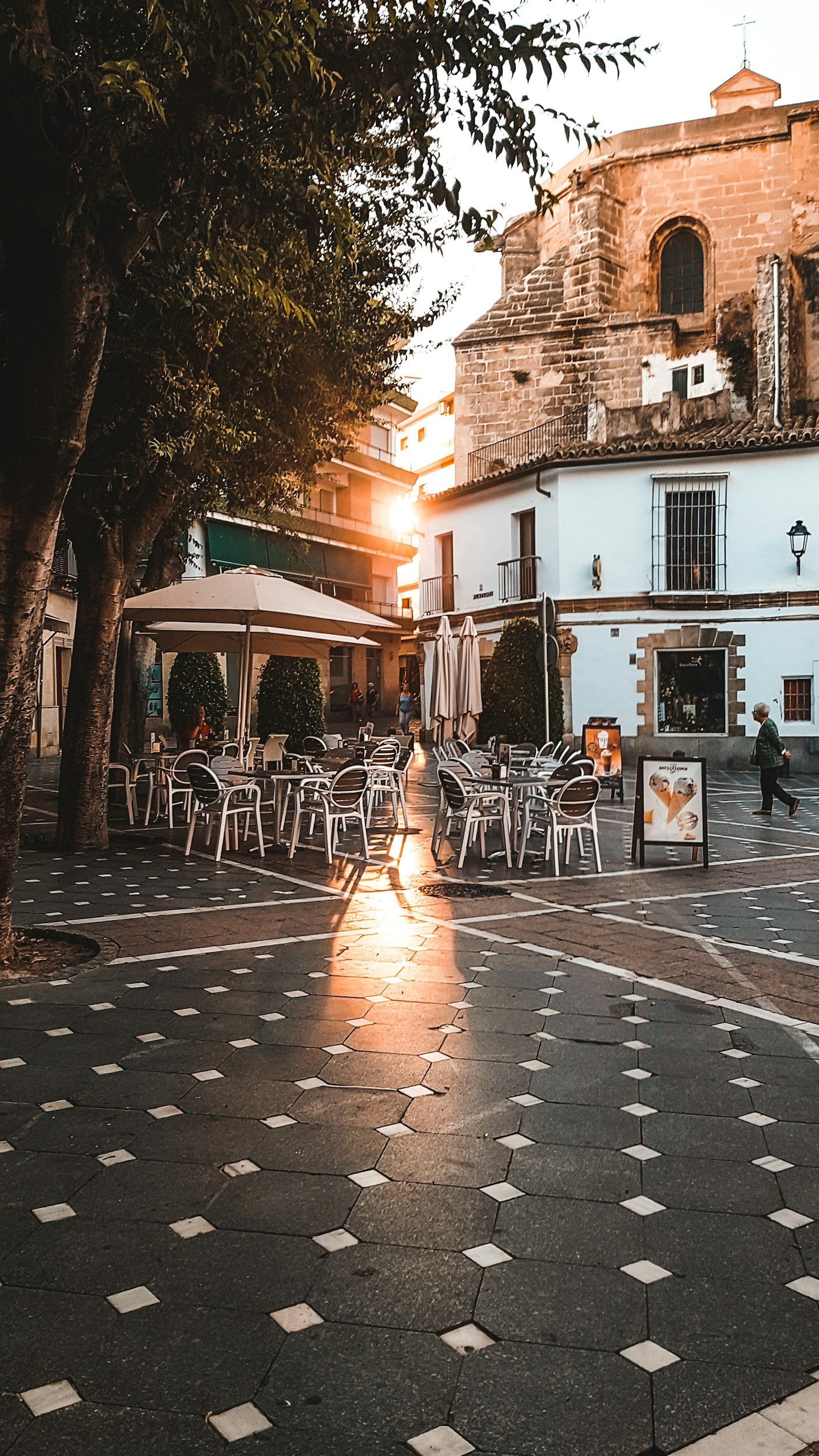
The beating heart of the city, Plaza del Arenal is where the divine arrives through human connection, through conversation, rhythm, laughter, and the shared flamenco music that turns strangers into kin.
Flamenco Peña in Santiago or San Miguel
In these intimate rooms, flamenco is not performance, it is invocation. A cry forged from centuries of joy and grief, a flame that refuses to die. In a single quejío (mourning), one can hear the entire philosophy of Jerez: truth must be felt before it is understood.
The Pure Horses of Jerez: Movement as Divinity
Jerez is a sanctuary for horses as ancient as its recorded memory. Since 720 B.C., these lands have bred and shaped noble steeds, and in 1912, the finest among them were granted the title of Pura Raza Española (the pure spanish race), elevating the Andalusian horse to worldwide acclaim.
Here, horses are embodiments of grace. Forged by centuries of devotion and nurtured in gentle fields, the Pura Raza Española moves like thought made visible, like a prayer carried in muscle and bone, the perfect connection between humans and horses. Their presence radiates ancient wisdom; their movements a blend of discipline, nobility, and luminous calm, feel almost spiritual. Their elegance becomes a form of sacred expression that emerges when the mind grows silent, reminding us of the harmony humanity once shared with the natural world.
Sacred Grounds Steeped in Time
The Royal Andalusian School of Equestrian Art
Within the arcaded courtyards of the Royal School, the communion between human and horse unfolds like a ritual older than kings. Trust becomes choreography, discipline becomes beauty, and every gesture reveals a bond shaped by centuries. In “Cómo Bailan los Caballos Andaluces,” each movement is a hymn, each turn a revelation, each pause a moment where the divine rests its hand upon the earthly as the centuries flow.
Alcázar of Jerez
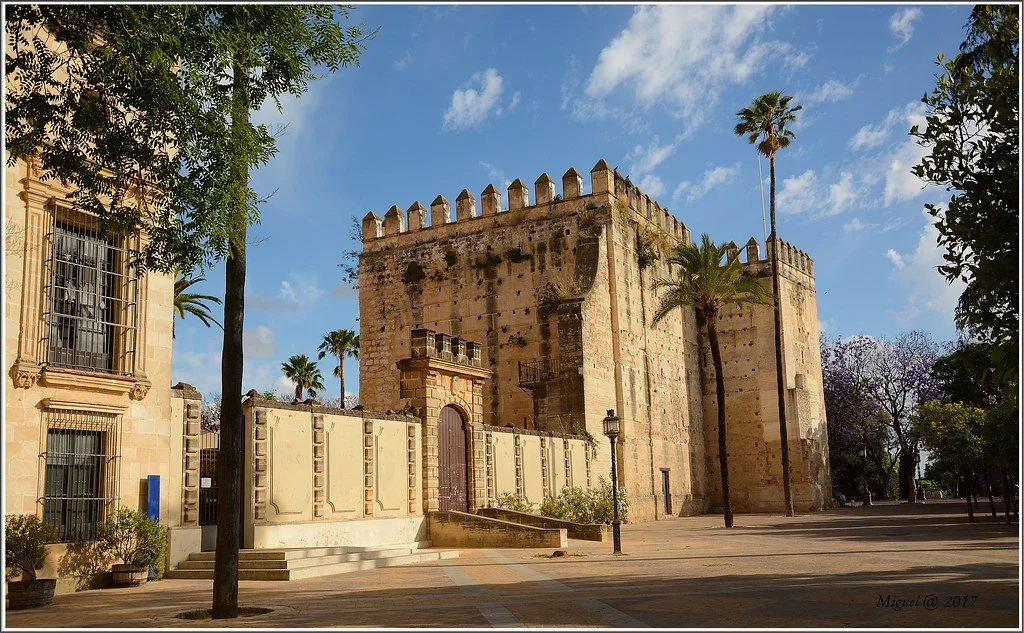
Within its ancient walls, the Alcázar of Jerez gathers nearly nine centuries of memory, holding the breath of every civilization that has passed through its gates. Raised in the 12th century under the Almohads, its horseshoe arches, geometric courtyards, and fortress towers reflect a world where architecture was a form of prayer, where mathematics, light, and shadow whispered the hidden order of the universe. After the Christian conquest of 1264, new layers were woven into its fabric: a soaring keep, a quiet chapel, and the Renaissance gardens planted in later centuries, where fountains murmur like veiled echoes of older rituals. Here, philosophy and spirituality hide in symmetry, and the arches frame the sky as if inviting contemplation of the meeting of cultures and the eternal dance between power and grace. In this single enclosure, Almohad austerity, Christian devotion, and Renaissance harmony converge like three currents of the same river, reminding the wanderer that history is not past, but alive, shimmering in the stones beneath their feet.
The Cathedral of San Salvador
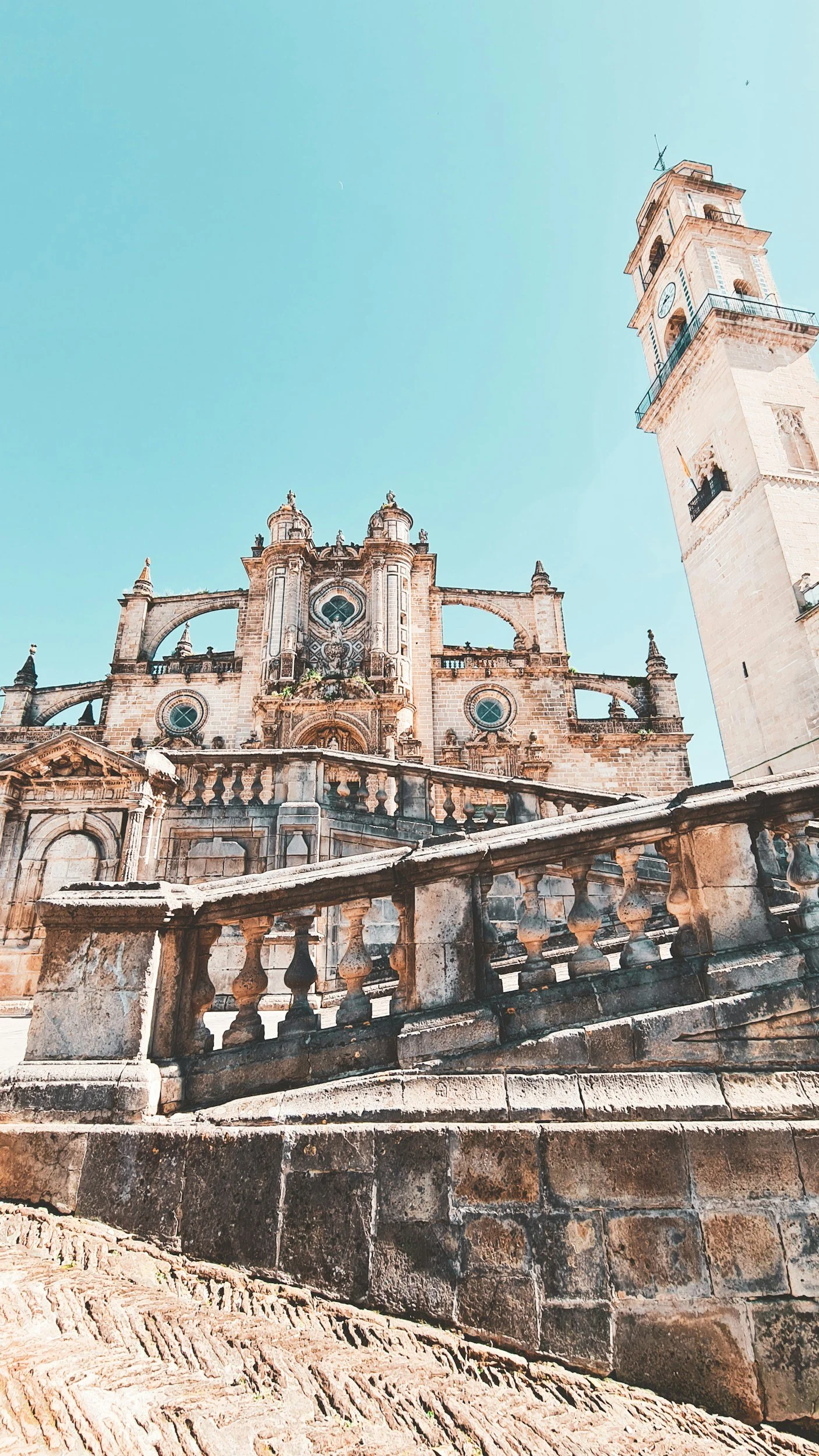
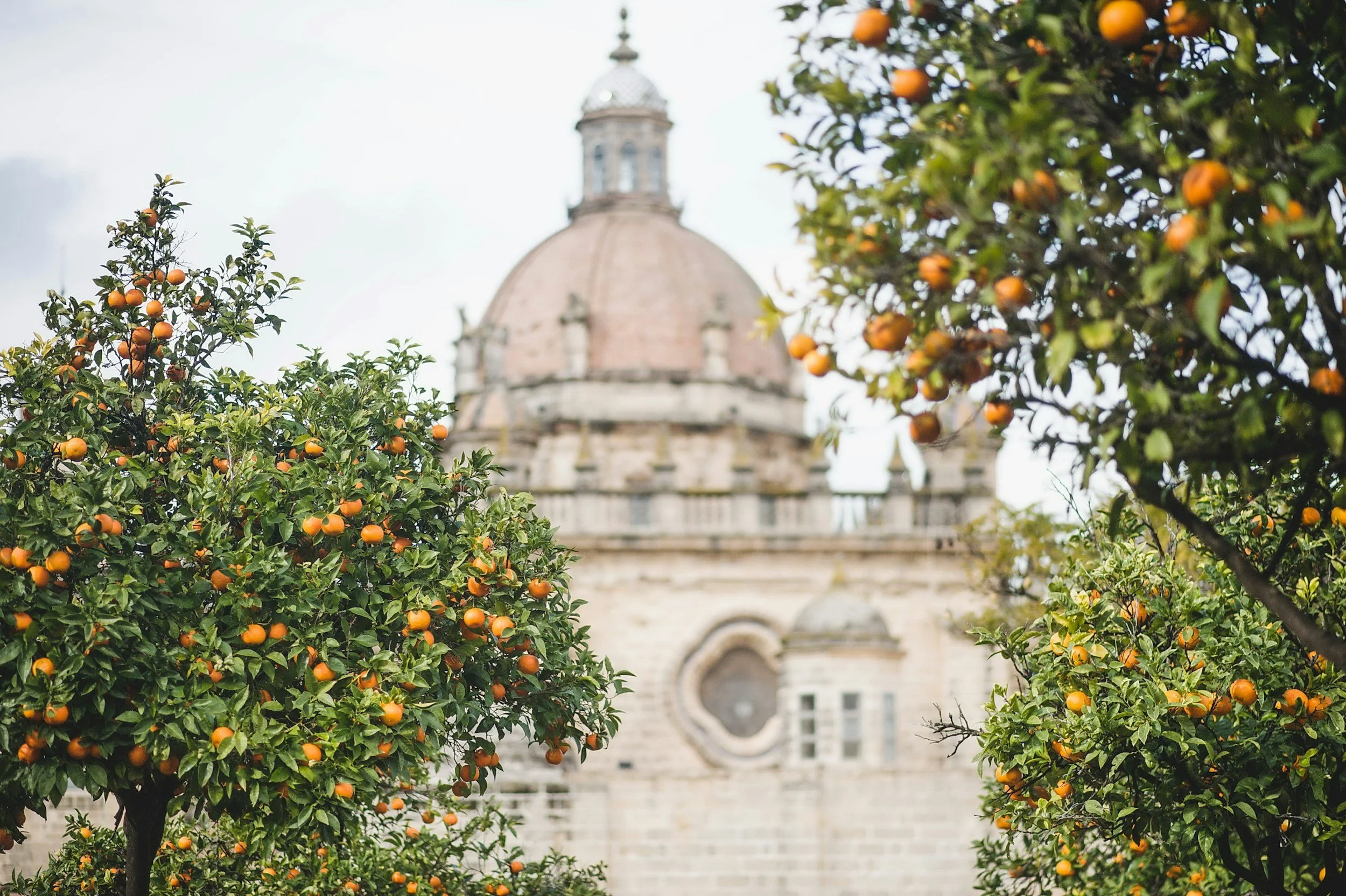
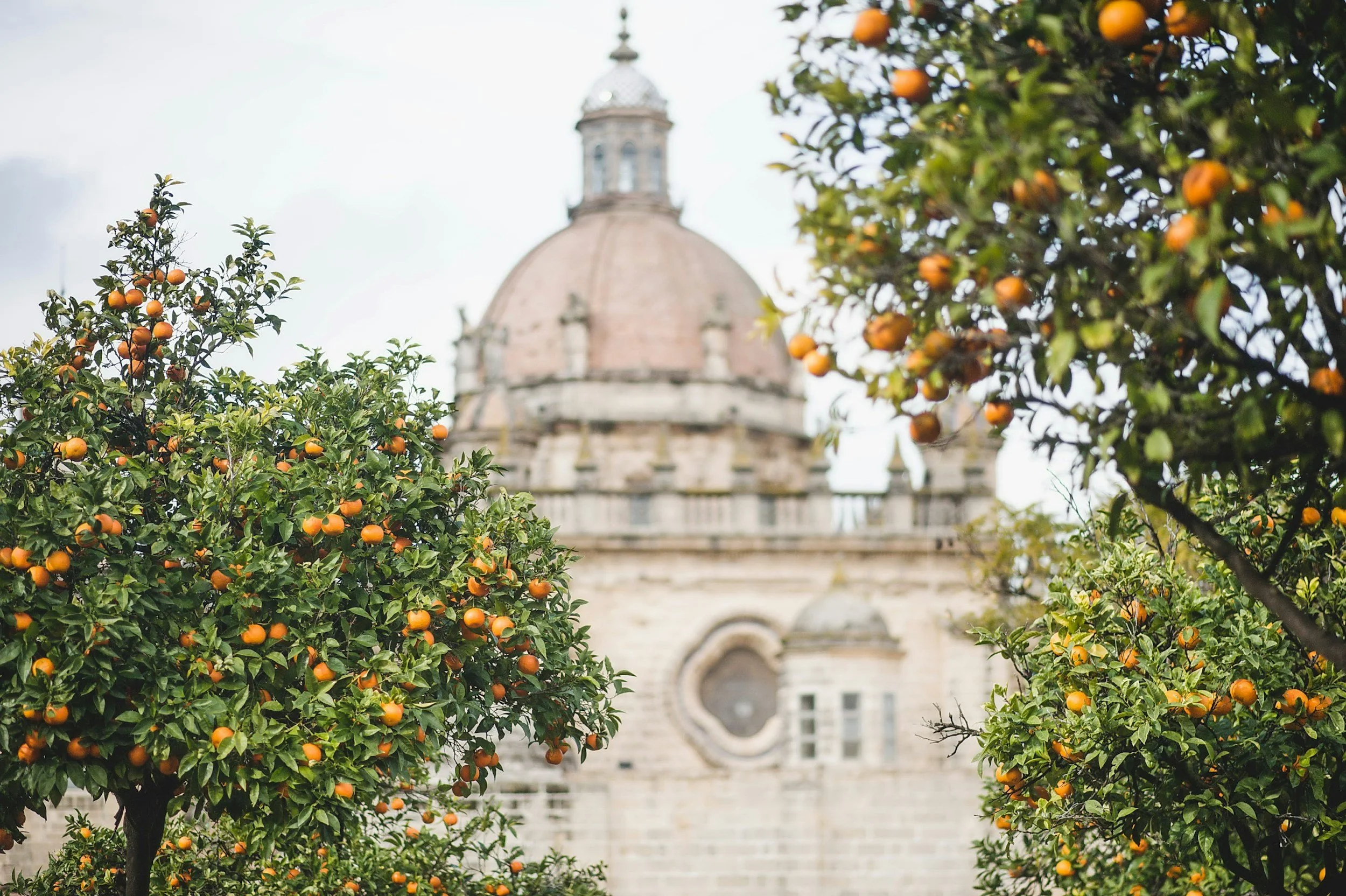
A vessel of stone and spirit, the Cathedral of San Salvador stands where the Great Mosque of Jerez once rose during the centuries of Al-Andalus. Built between the 17th and 18th centuries, it weaves Gothic verticality, Baroque movement, and Neoclassical clarity into a single breath of architecture, reflecting the long, layered history of the city itself. Its colossal dome, completed in 1778, crowns Jerez like a beacon of devotion. Light pours through its stained-glass windows like liquid revelation, illuminating chapels filled with centuries-old altarpieces and the famed image of Cristo de la Viga, a Gothic carving preserved from the medieval period. Here, stone remembers every era, and the cathedral reminds us that humans have always sought to sculpt the divine into forms they could enter, touch, and embrace.
The Cartuja de Santa María de la Defensión
A monastery where silence deepens into meaning. Monks once lived in contemplation beside wild horses, showing that the spiritual and the untamed can share the same threshold. The Cartuja is not merely a monastery, it is an axis where heaven leans closer to earth, a place where silence gathers weight, and the soul feels itself returning to something ancient and unspoken.
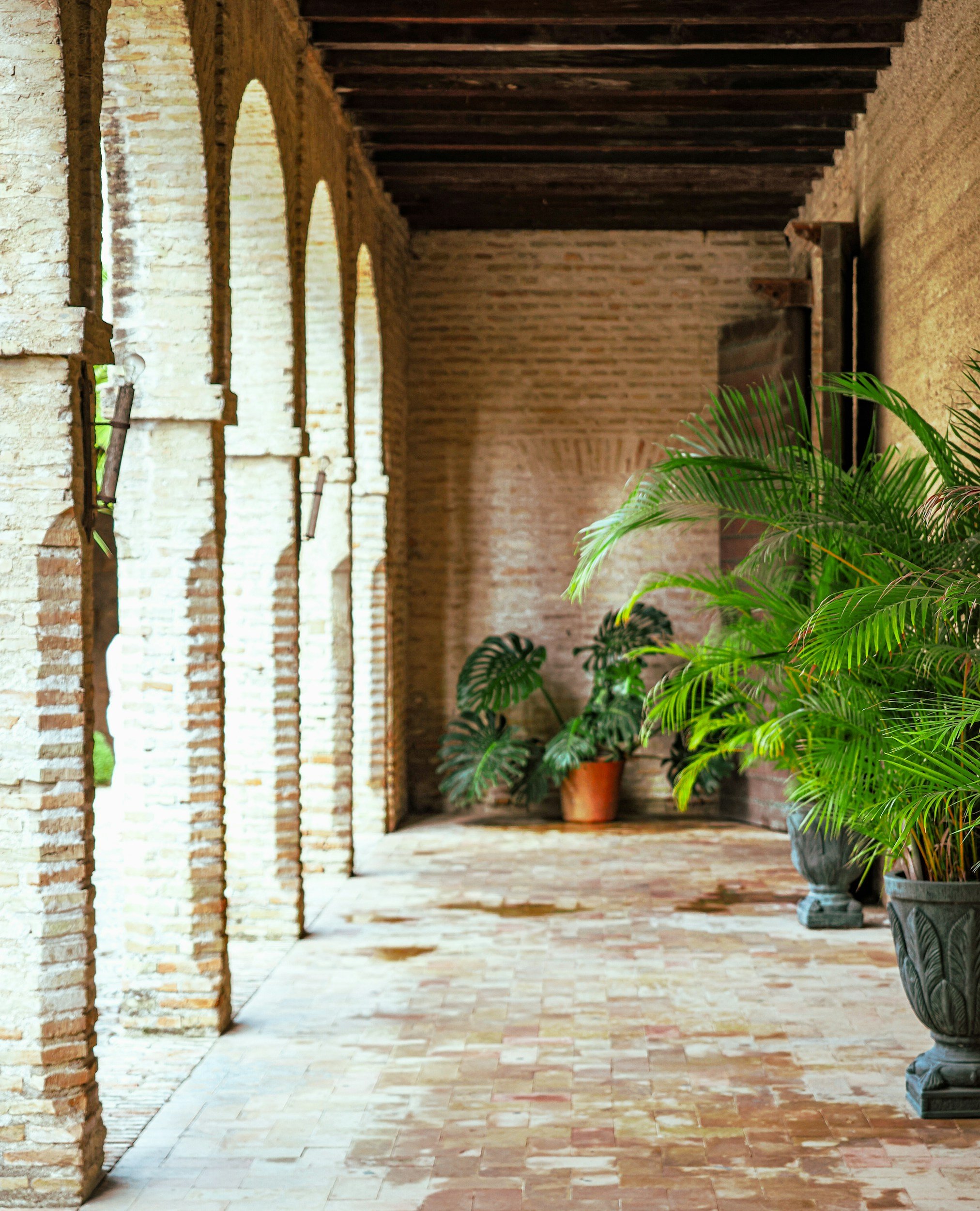
The Cartuja de Santa María de la Defensión rises on land where battles were once fought and prayers later took root. Founded in the 15th century, its first stone laid in 1463, it stands as one of the most remarkable Carthusian monasteries in Spain, shaped by centuries of devotion, silence, and artistic splendor. Its architecture blends late Gothic, Renaissance, and Baroque elements, with the magnificent façade by Andrés de Ribera reflecting a mastery of symmetry and sacred proportion. For centuries, Carthusian monks lived here in profound seclusion, tending orchards, copying manuscripts, and contemplating the divine while the famous horses of Jerez, bred nearby since antiquity, grazed along the monastery’s lands. In this rare meeting between the spiritual and the untamed.
A City Where Past and Present Touch Hands
Jerez de la Frontera is a living conversation: between field and spirit, grape and time, flamenco’s cry and the whisper of vineyards, noble horses and the wildness of the soul, the ringing of bells and the stillness that follows. This is a city where humanity has always reached upward, toward truth, beauty, and something eternal, and where, in rare and luminous moments, the divine reaches back.